Every time I walk into a building, I don't look at the cladding or the fancy light fixtures. I look at the floor. Specifically, I look at where the floor changes material, the width of the hallway, and the placement of the exit signs. Architecture is not a static sculpture; it is a choreography of human movement. For twelve years, https://highstylife.com/the-architecture-of-restraint-orchestrating-texture-sound-and-light/ I have helped museum directors and retail CEOs understand that if a visitor cannot intuitively find the bathroom or the checkout counter, the architecture has failed, regardless of how many awards it has won.
Now, we are migrating these same principles into VR environments and digital interfaces. We are told that in the digital realm, "space" is obsolete because you can teleport, spawn, or refresh a page. I disagree. The principles of wayfinding, narrative pacing, and spatial hierarchy are more relevant than ever. When you strip away the gravity of the physical world, you are left with nothing but the architecture of intention. If we don’t design that carefully, we aren't building "experiences"—we are building mazes.
The Threshold Problem: Why Digital Entry Matters
I have a visceral reaction to "glitch" transitions—those jarring, sensory-overload jumps that developers often use to move users between VR stages. In physical design, the entrance is the most important 30 seconds of a visitor's journey. It is where they recalibrate. You don't walk into a cathedral and immediately find yourself at the altar; you walk through a narthex, a transitional space designed to shrink the noise of the street.
In digital design, we often skip this. We treat a login screen or a loading screen as a necessary evil to be finished as fast https://dlf-ne.org/how-do-you-design-emotional-connection-into-a-building/ as possible. But look at platforms like mrq.com. They understand something fundamental about the digital interface: the "entrance" is a hierarchy of clarity. By treating their UI not just as a set of buttons, but as a spatial sequence, they reduce the cognitive load of the user. The way they organize their game lobby, for example, mimics a well-planned retail floor map. You know exactly where you are, where the "aisles" (categories) are, and where the "checkout" (the action) happens. This isn't just UX; this is experience-centered architecture translated into pixels.
Narrative Pacing Through Circulation
In architecture school, we were taught that circulation is the "nervous system" of a building. If the circulation is sluggish, the building dies. In virtual worlds, designers often confuse "freedom" with "lack of structure." They provide an open-world sandbox and assume the user will have an "immersive experience"—that word again—without providing any cues on where to go next.
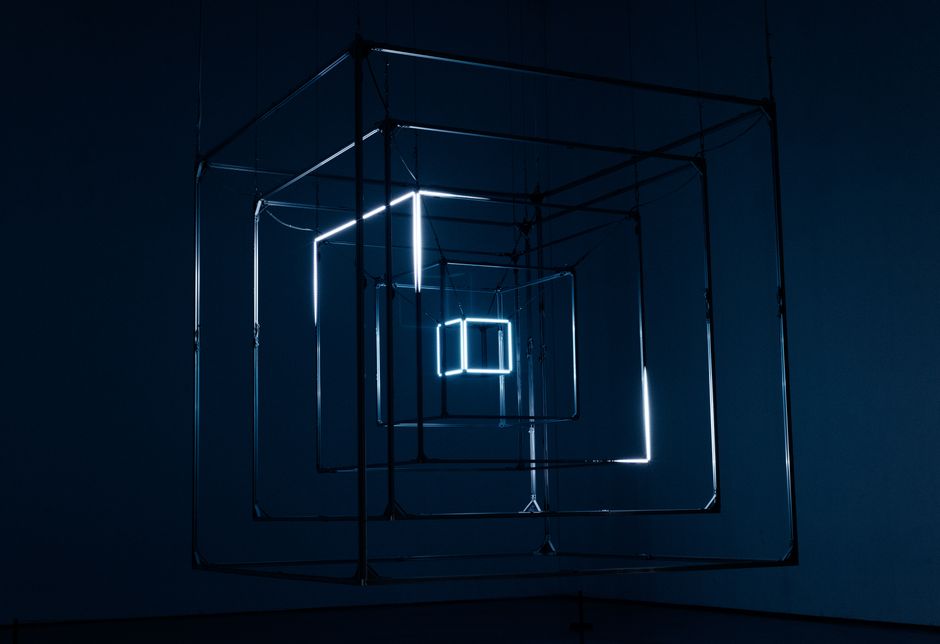
A good queue—whether you are waiting for a ride at a theme park or clicking through a menu tree—is a narrative device. It manages the user’s anticipation. If I am building a VR environment, I am building a sequence of rooms. Each room needs a "visual magnet"—a focal point that tells the eye, "Look here, then move there." If everything in a digital space is equally weighted, the eye stops scanning. It goes numb. Spatial presence is achieved when the user feels the weight of the environment pushing them toward the next interaction.
The Architecture of UI: Digital Zoning
When I consult on physical wayfinding, I use a "zone-based" approach.
- The Primary Path: The main artery of traffic. The Threshold: Changes in lighting or color that signal a new area. The Landmark: A consistent visual marker that persists across the space.

We can map these directly onto digital interface design. The following table illustrates how physical architectural concepts map onto digital UI paradigms:
Architectural Concept Digital UI/UX Equivalent Purpose Circulation Path Menu Hierarchy / Breadcrumbs Prevents user disorientation. Visual Landmark Global Navigation / Brand Iconography Provides a "home" anchor in the UI. Spatial Zoning Sectional layout (e.g., header, sidebar, footer) Establishes content importance. Threshold/Transition Micro-interactions / Animated states Signals shift in context or intent.Clarity and Visual Hierarchy: The Enemy of Clutter
Passive design choices are the enemy of experience. "Let's put a banner here because it fits" is not a design strategy; it is a failure of spatial reasoning. When a website or a VR environment becomes too "noisy," the user stops seeing the content and starts seeing the obstacles. This is why I hold such a disdain for the word "immersive" when it's used as a synonym for "busy."
True immersion is calm. It is the clarity of knowing exactly what to do next without having to read a manual. Take a look at the navigation flow on sites that prioritize user-centered design like mrq.com. They don't overwhelm you with every option at once. They use a clear visual hierarchy—size, color, and placement—to guide the user. The architecture of the page feels "roomy," allowing the eyes to rest on the most important actions. In VR, if your world is cluttered, the user will experience "spatial fatigue." Your brain will literally stop processing the environment because it’s being assaulted by data.
Why "Space" Matters More Than Ever
So, does space still matter in the age of virtual reality? It matters more than in the physical world. In the physical world, nature provides some logic—gravity, walls, the horizon. In a digital world, you are the god of the physics. You are responsible for every unit of distance, every color choice, and every millisecond of transition.
If you don't build with architectural rigor, you are not creating a space; you are creating a void. And no user wants to hang out in a void for long.
Refining the Workflow: A Three-Step Checklist for Digital Architects
Audit the "Entrance": How does the user arrive? Is the transition from their previous state (the last page or the real world) smooth? If they feel disoriented, you need a narthex. Define the Path: Can you draw a line from the entry to the primary goal without the user having to guess? If you can't, your "corridors" (navigation) are too narrow or too cluttered. Prioritize the Landmark: Does the user always know how to get back to the start? Keep your anchor points consistent. Do not move the exit sign just to be "creative." Creativity belongs in the content, not the wayfinding.We need to stop pretending that digital design is somehow exempt from the laws of space and movement. Experience design is not about high-end graphics; it is about respecting the user's need for orientation. Whether it is a brick-and-mortar museum or an online gaming platform, the goal remains the same: treat the user like a guest, provide them with a clear path, and—for the love of god—make sure they know how to find the exit.