I am currently sitting in a basement coffee shop that has historically been the graveyard of mobile connectivity. I do this on purpose. I want to see which apps have actually optimized their assets and which ones are just bloated wrappers for web pages. I pulled up my phone, tapped on a streaming app, and—inevitably—I was met with a loading spinner. My internal clock immediately started counting. One second. Two seconds. By the third second, my thumb was already hovering over the home button, ready to swipe the app away into the digital void.
Why am I like this? Why are you like this? We have become a culture of extreme impatience, but it isn’t because we’re "spoiled." It’s because our smartphone entertainment habits have been conditioned by a decade of aggressive UX optimization. We have been taught that the the digital world should react at the speed of thought. When it doesn't, we don't blame the infrastructure; we blame the product.
The Death of Patience: Understanding Instant Access Expectations
There was a time, not so long ago, when we accepted that "loading" was part of the experience. We watched progress bars crawl. We waited for buffering icons to cycle through their little dances. But as mobile internet speeds evolved from 3G to 5G, the threshold of what we consider "acceptable" has shifted dramatically. Today, instant access expectations aren't just a luxury; they are a baseline requirement for any mobile app that wants to survive the first 30 seconds of user interaction.
From a UX copywriting perspective, I’ve spent years telling product teams that if a user has to wait more than two seconds for a screen to render, you have already lost their attention. If your app requires a 20-second sign-up flow just to get to the content, you are actively encouraging churn. We aren't just impatient; we are calculating the "cost" of our time versus the "value" of the content. If the friction of waiting exceeds the perceived value of the video, the app gets deleted. It’s that simple.
Smartphone-First Accessibility: Why Speed is an Inclusion Issue
We often talk about accessibility in terms of screen readers, high-contrast text, or haptic feedback. But speed is the most overlooked accessibility feature of all. Think about the user on a budget phone, using a data-constrained plan in a rural area. If your app is not optimized for fast-loading streaming, you are effectively telling those users that they aren’t your target demographic.
Performance-based accessibility means ensuring that your application is usable across a spectrum of connectivity. If your "fast" experience only works on a flagship device connected to ultra-wideband 5G, you have failed the core promise of mobile technology: ubiquitous access.
Metric Old Standard (2012) Current Standard (2024) Sign-up time < 2 minutes < 20 seconds (or social login) Video start latency 3–5 seconds < 500 milliseconds UI interaction delay Noticeable pause Near-zero/instant Progress feedback Spinning wheel Skeleton screens/optimistic UIThe Illusion of Speed: How Developers Play with Our Perceptions
You might notice that the best apps don't actually load faster—they just *feel* like they do. This is the art of "Optimistic UI." Instead of showing a blank screen while the app fetches data from a server, developers use skeleton screens—those grey, pulsing placeholders that mimic the shape https://dlf-ne.org/why-do-i-compare-my-banking-app-to-netflix-speed/ of the content. It’s a psychological trick. By showing you the *structure* of the content immediately, the brain perceives the app as being "ready," even if the actual data is still trickling in.
I’ve worked on onboarding flows where we spent more time optimizing the transition animations between screens than we did on the actual features. Why? Because if the screen cuts to black, the user feels a drop in momentum. If the screen transitions smoothly, the user stays in the flow. We are fighting against the natural desire for the user to exit.
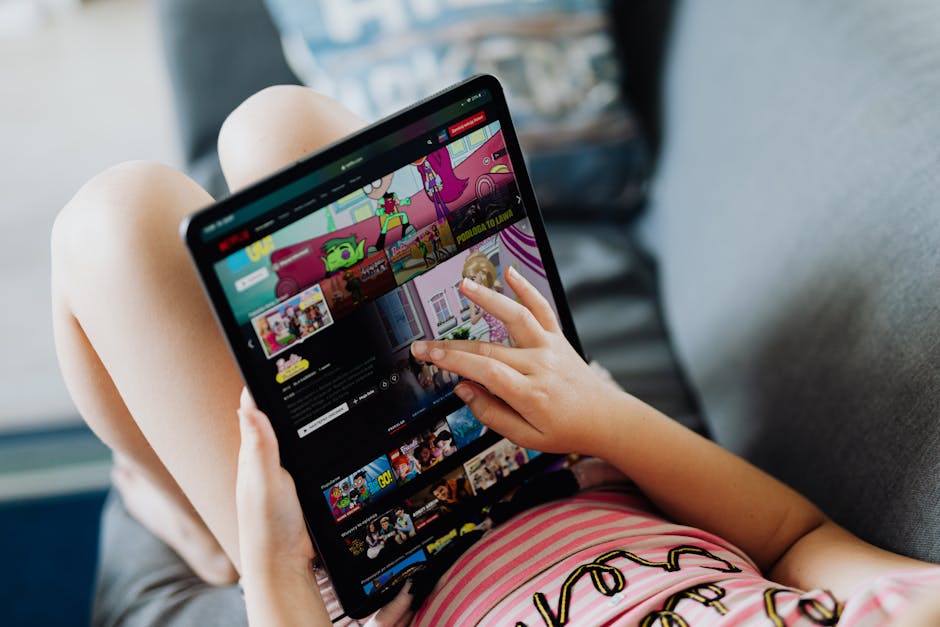
The Real-Time Trap: Participation vs. Passive Watching
Our expectations have also been warped by the rise of real-time participation. It’s not enough for a video to load; it has to be synchronized with the rest of the world. Think of Twitch, TikTok, or live sports apps. When we watch something live, we aren't just viewers; we are participants. We want to comment, like, and share the second we see the clip. If the video streaming is behind the "real-time" pulse of the room, the experience feels broken. We expect fast-loading streaming because we are terrified of being the last person to know about a cultural moment.
Convenience as a Loyalty Driver
Why do we keep coming back to the same apps? It’s rarely because they have the best content. It’s because they are the easiest to use. Exactly.. Loyalty is built on the absence of frustration.

I keep a running list of apps that bury the logout button or force me through three levels of menus just to change my subscription settings. These are "dark patterns"—design choices intended to keep me locked in. But you know what keeps me locked in better than a hidden logout button? A product that works so well I never *want* to log out. When an app respects my time, loads instantly, and delivers content without a fight, I become a loyalist. When an app treats my time as disposable, I’m gone in a heartbeat.
Conclusion: The Future of the "Always-On" Mindset
So, why do I expect videos to load instantly? Because the technology exists to make it happen, and the apps that don’t prioritize this are simply not trying hard enough. In a world where we can access the sum of human knowledge in a pocket-sized device, "buffering" is a legacy term that belongs in the era of dial-up modems.
As we move toward more immersive, mobile-first experiences, the bar will only get higher. We will stop asking for "fast" and start asking for "invisible." We want the app to be an extension https://highstylife.com/the-notification-tightrope-how-smart-platforms-balance-relevance-and-retention/ of our own reflexes. Until then, I’ll be sitting in this basement, testing your app on this terrible Wi-Fi. If it doesn't load, I’ll be moving on to the next one. And based on the current landscape of smartphone entertainment habits, I’m certainly not the only one.
You ever wonder why about the author: a former ux copywriter and digital culture columnist with 11 years of experience in the streaming and mobile gaming space. Known for testing apps in dead zones and keeping a very public list of companies that make unsubscribing impossible.