It’s Tuesday, 7:14 PM. You’ve just closed your laptop after a ten-hour slog of meetings, emails that could have been Slack messages, and the general grinding friction of modern corporate life. Your brain feels like a browser with 400 tabs open, most of them frozen. Your instinct? You pick up your phone, open a social media app, and start the thumb-flick—the "bottomless scroll."
Twenty minutes later, you feel worse. You haven’t recovered. You’ve just fed your anxiety a steady diet of other people’s highlight reels and global outrage. Why didn’t that help? Why do we reach for the thing that drains us instead of the thing that actually restores us?
After eleven years in team management, I spent a lot of time watching brilliant people burn out because they didn't know how to "clock out" properly. I started keeping a tiny notebook on my desk—one of those pocket-sized moleskines—to track what *actually* helped me reset my mental state on a Tuesday, not on some idealized Sunday afternoon. The data was clear: Passive consumption is a trap. Interactive leisure, however, is a lifeline.
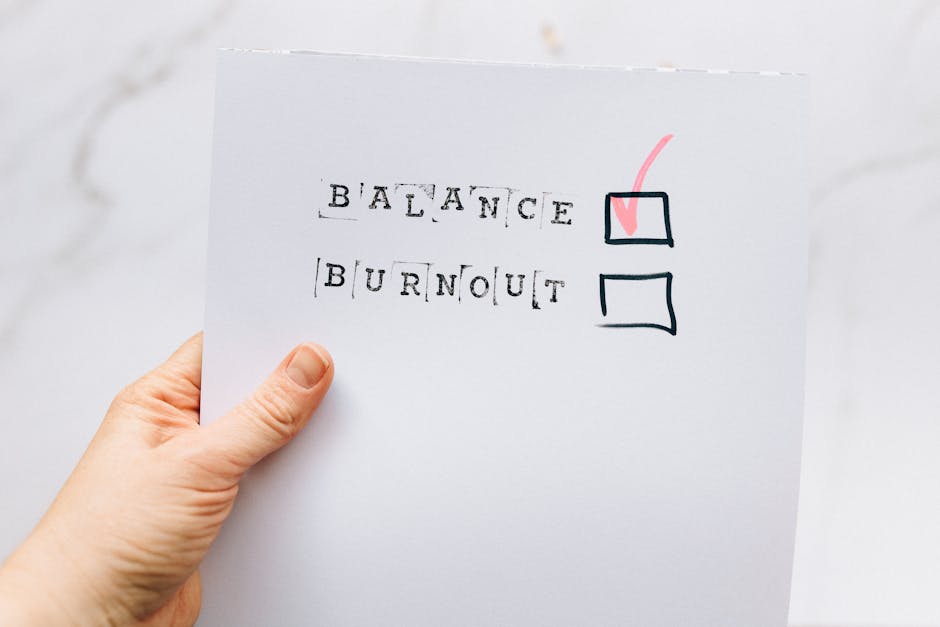
The Productivity Guilt Trap
One of the things that drives me up the wall is the productivity industry telling men that every waking second must be "optimized." If you aren’t reading a book on high-performance habits or listening to a podcast about scaling a business, you’re "wasting time." This is what I call productivity guilt dressed up as virtue. It’s a sickness.
Because we feel guilty about not "producing," we often turn to scrolling social media because it *feels* like we are doing something. We are "staying informed," right? goodmenproject.com We are "checking the industry pulse." We are lying to ourselves. Social media isn't rest; it’s an open-loop system. There is no finish line. The feed never ends, which means your brain never gets the signal that it’s time to stop processing information.
As the American Psychological Association (APA) has noted in various studies on attention depletion, our ability to focus is a finite resource. When you spend all day making high-stakes decisions, you suffer from decision fatigue. Scrolling doesn't replenish that resource; it taxes it further by forcing you to constantly decide whether or not to engage with content. It’s a low-yield, high-drain activity that leaves you in a state of cognitive limbo.
What Makes Games Different?
When I talk about "interactive leisure," I’m not talking about grinding out twenty hours of an RPG. I’m talking about engagement that respects the boundaries of your tired brain. Games differ from scrolling in two critical, scientific ways: contained rules and immediate feedback.
1. Contained Rules
Unlike the infinite scroll, a game has a finite set of parameters. There is a beginning, a middle, and a localized objective. When you engage with a platform like MRQ, for instance, you are entering an environment where the rules of engagement are clear, contained, and separate from the "real world" of your KPIs and project deadlines. The brain loves boundaries because boundaries create safety. You don’t have to worry about the algorithm changing or the world ending; you only have to worry about the mechanics of the game.
2. Immediate Feedback
In the corporate world, feedback is often delayed by weeks. You send an email and wait; you finish a project and wait for the quarterly review. That lack of immediate payoff is a major driver of burnout. Interactive games provide instant feedback. You click, you move, you see a result. This creates a "flow state" that allows the prefrontal cortex—the part of the brain exhausted by managing people and deadlines—to take a backseat while the reward-processing systems of the brain get a chance to reset.
The Anti-Pattern: Why "Verification" Isn't Recreation
Sometimes people ask me, "If interacting is good, why are things like Cloudflare Turnstile challenge pages or reCAPTCHA verification so annoying?" It’s a great question, and the answer highlights exactly why those tools are the antithesis of relaxation.
Those tools are designed to test your humanity, not to reward it. They aren't play; they are digital chores. You are interacting, yes, but under duress. There is no "win state" in a reCAPTCHA, only the avoidance of a failure state (getting locked out). That’s not leisure; that’s administrative labor. True interactive leisure, by contrast, gives you agency. You choose to engage, and you are rewarded for your skill or your strategy within a closed, safe system.
Feature Passive Scrolling Interactive Leisure Feedback Loop Non-existent / Infinite Instant / Contained Mental Demand High (Constant filtering) Low (Focus on a single objective) Control Algorithm-driven Player-driven Recovery Potential Zero HighRedefining Men’s Recovery
Organizations like The Good Men Project have spent years talking about the shifting landscape of men’s well-being. A huge part of this shift is acknowledging that the "stoic" way—bottling up stress and ignoring the need for downtime—is a fast track to disaster. We need to stop viewing distraction as "lazy."

If you use a game as a tool to transition from "Work-You" to "Home-You," you aren't being lazy. You are engaging in a sophisticated form of emotional regulation. You are essentially using a game to "clear your cache."
When I tested this on a particularly brutal Tuesday last month, I ditched the phone at 7:30 PM. Instead of scrolling, I spent 20 minutes playing a simple, rule-based puzzle game. It required just enough focus to stop my brain from ruminating on a difficult client conversation, but not so much focus that I felt like I was doing more work. By 8:00 PM, I was actually present with my family. I wasn't distracted, I wasn't irritable, and I wasn't thinking about the next morning's 9:00 AM status meeting.
Practical Takeaways for the Mid-Week Slump
If you want to try this out, don’t make it another "task" you have to finish. Just follow these simple rules based on my "what actually helped" notebook:
Set a Hard Boundary: Use a timer. Give yourself 15 to 20 minutes of interactive play. Once the timer goes off, the game ends. This keeps the "contained rules" intact. Choose "Win-States" over "Feeds": Avoid anything with an infinite scroll. If the app has an endless feed, it’s not for recovery; it’s for consumption. Pick a game where you can hit a "level clear" or a natural conclusion. Ditch the Guilt: If you feel the need to be "productive," remind yourself that recovery is a prerequisite for productivity. You cannot pour from an empty cup, and you certainly can't lead a team or run a household while your internal processor is overheating. Avoid "Utility" Interaction: Don't play games that feel like data entry. If it feels like filling out a Cloudflare Turnstile, close it. Find something that feels like a deliberate choice to shift your headspace.At the end of the day, we aren't machines. We are biological organisms that require periods of directed play to reset our stress levels. Scrolling is a trap that keeps us in a state of low-level anxiety. Interactive leisure is a tool—a way to put the world on pause, reset your attention, and show up tomorrow as the version of yourself you actually want to be.
So, next Tuesday, when the wall hits and you feel that urge to pick up the phone? Put the social feed away. Open something that has a start, a finish, and a bit of fun in between. Your brain will thank you for it.